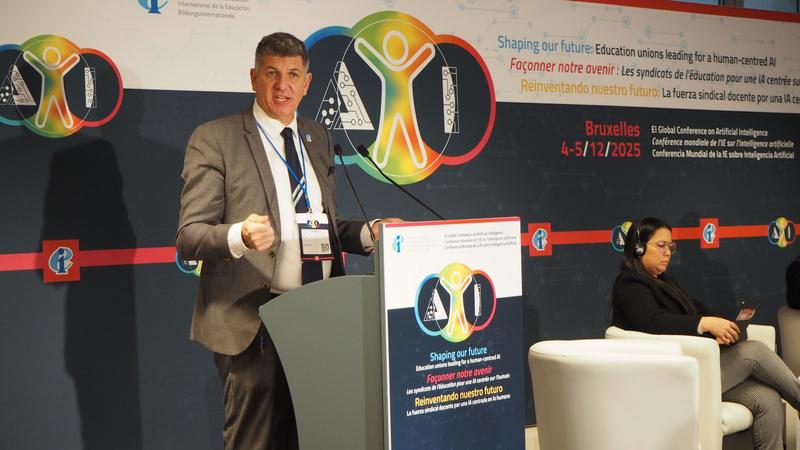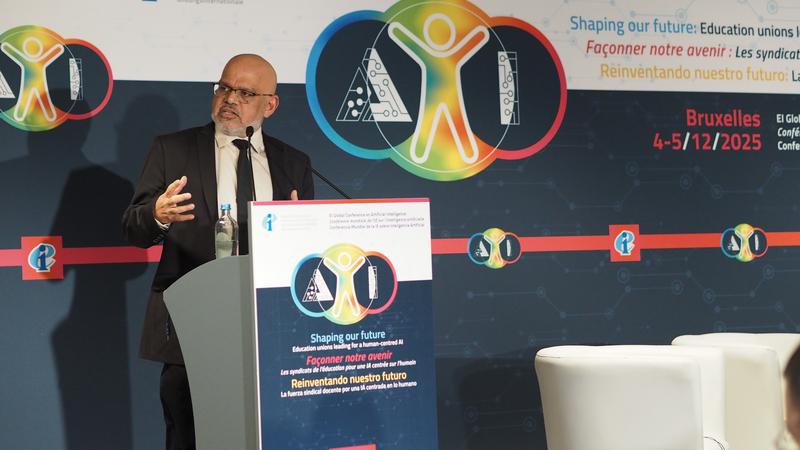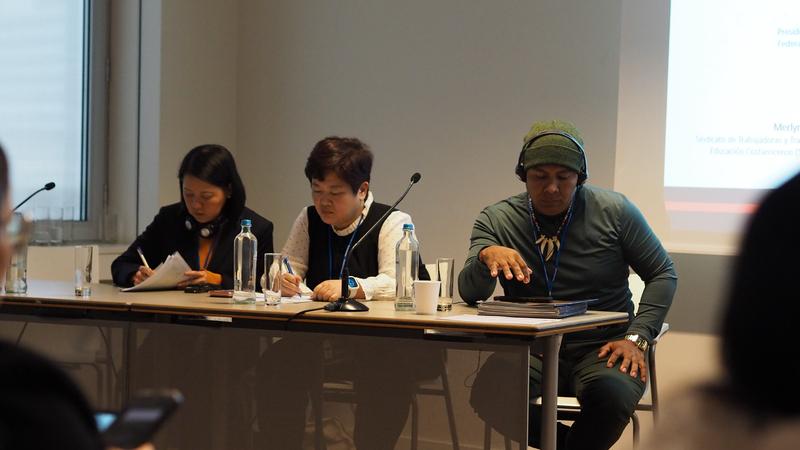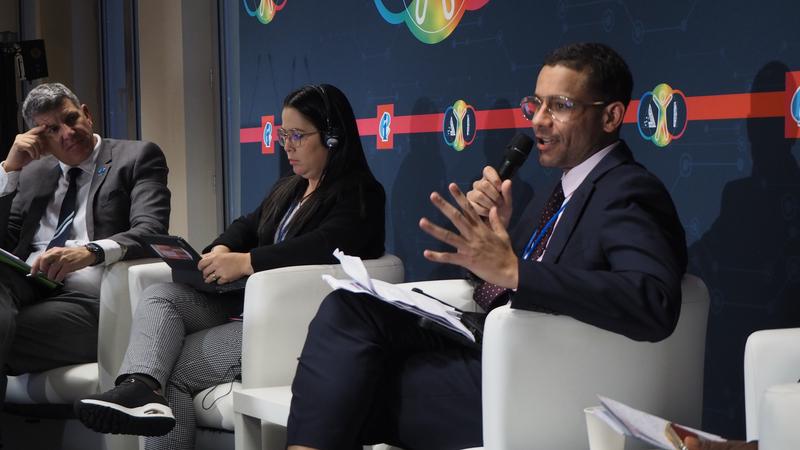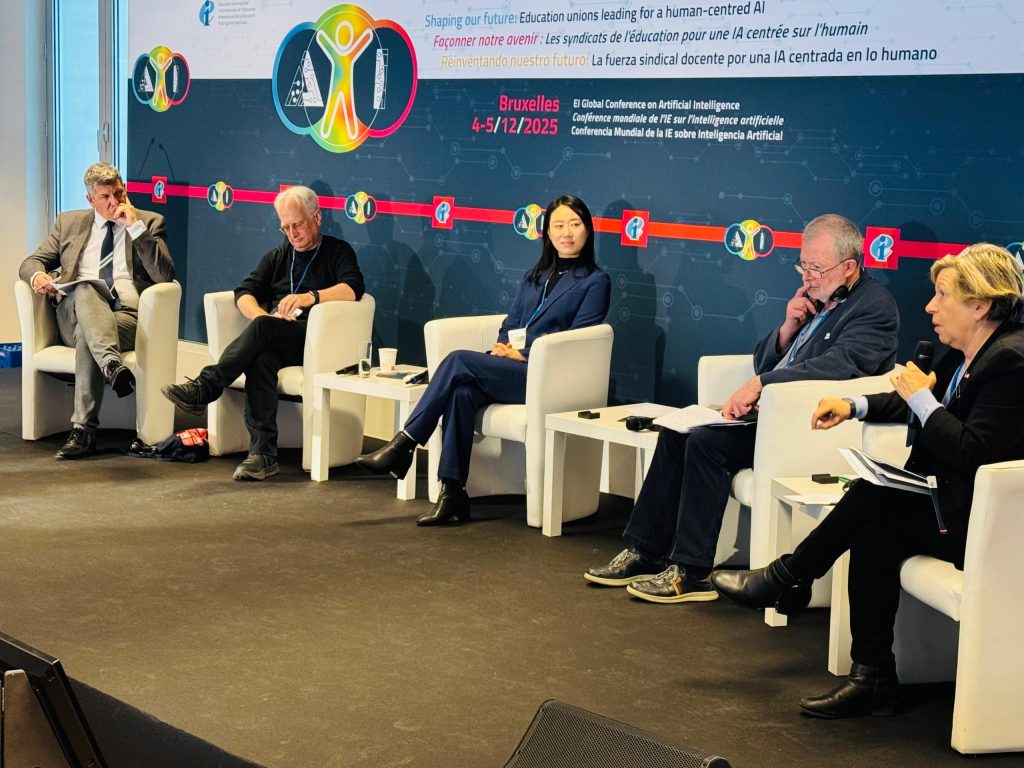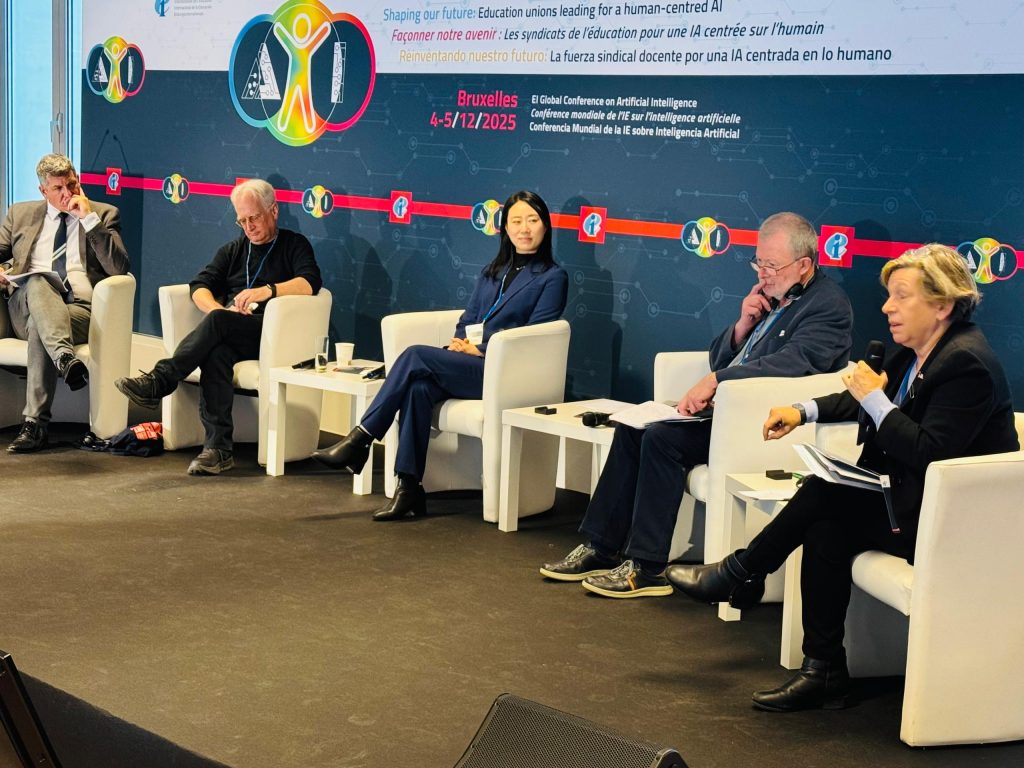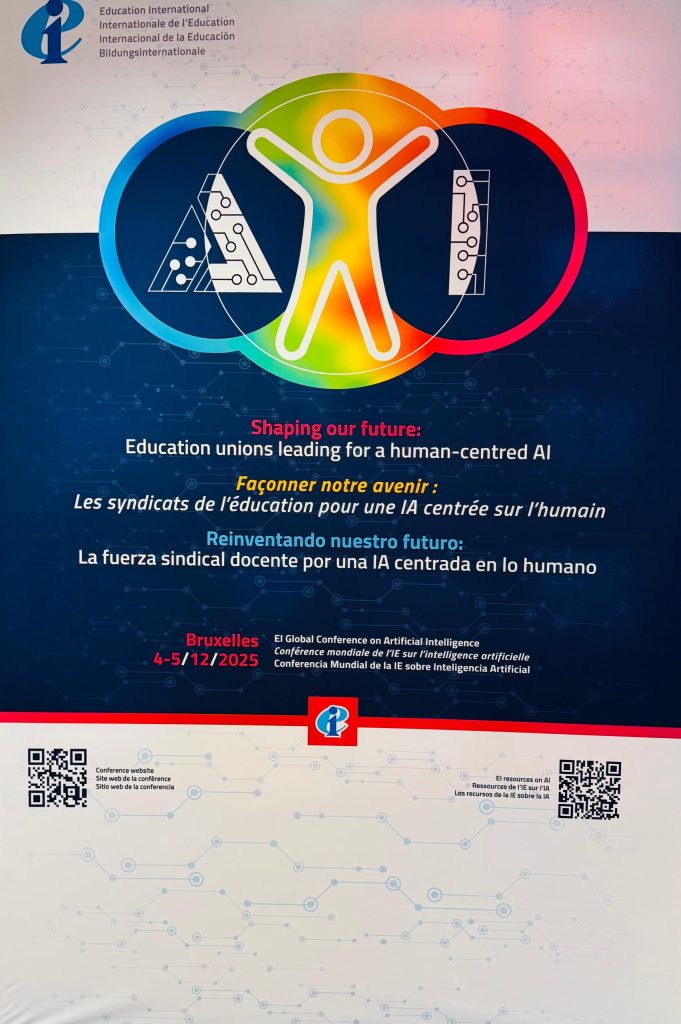
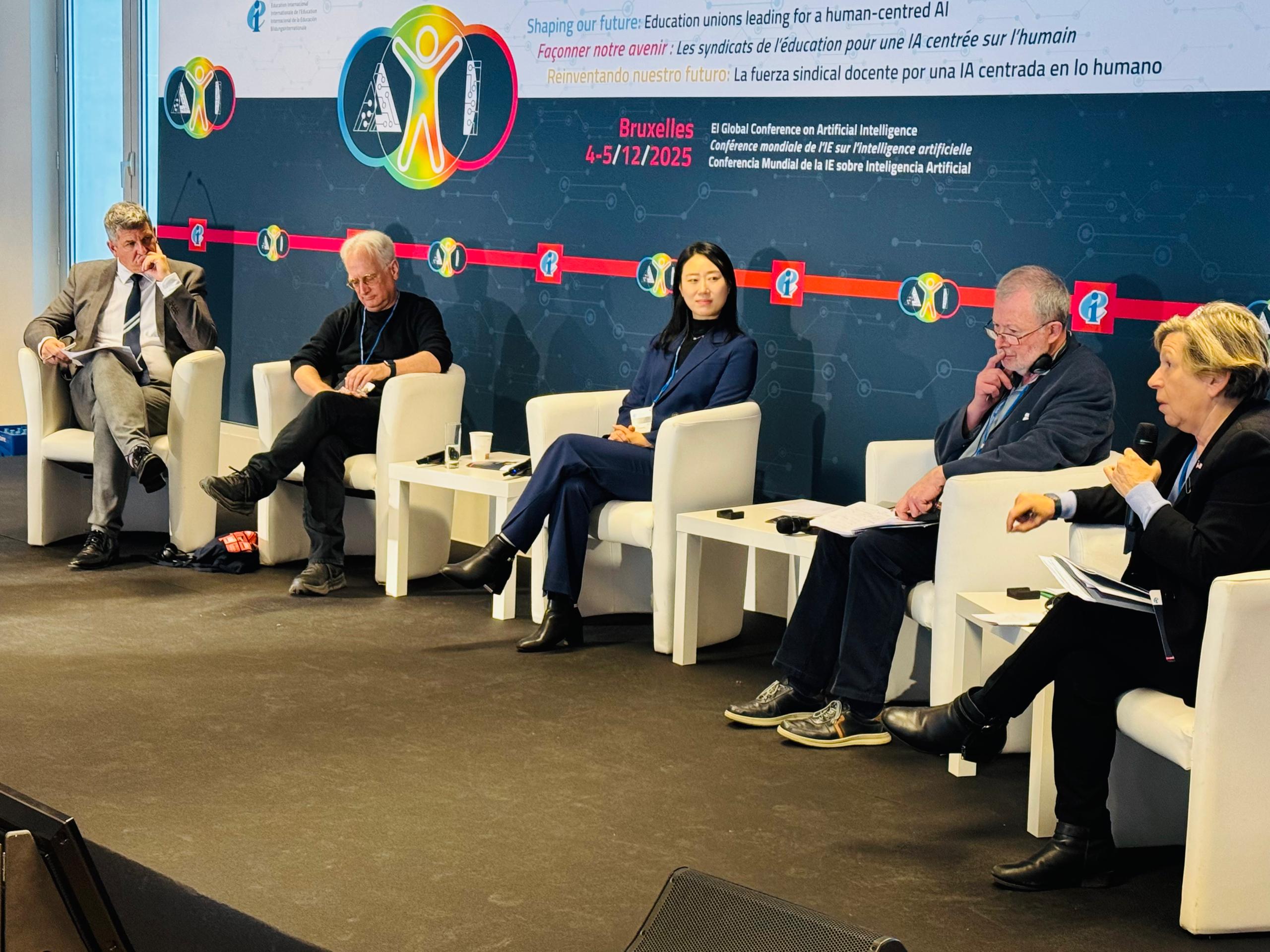
The world descended in Brussels on December 04-05, 2025 to critically assert the Trade Unions’ role in shaping future integration of AI in education.
The theme of the conference was “Shaping our Future: Education Unions Leading for a Human-Centred AI”
FRETUM and TAWU were among international Trade Unions that attended the conference. Driven by their quest to advocate for legislative reforms that are people driven, that responds to emerging technological advancements which challenges tried and tested education standards. The Unions endeavor to be abreast with developing trends that rattles the very existence of classroom teachers, they seek to not only challenge the unfolding degradation of classroom teaching, but to influence law and policies for a “human-centered AI”
The conference, in the quest to echo furtherance of balanced approach in pursuit of innovation in education, made the following unwavering call;
“Maintaining human agency ensures AI supplements but does not replace human educators or decision-making ”.
The enabling core advocacy principles included but not limited thereto; a call for:
- AI-enabled technologies used in education align with the principles of social justice and human rights.
- Promoting transparency, accountability, and address potential biases and discrimination, and protect student privacy and data security, in the development and deployment of AI-enabled technologies in education.
- Promoting and funding of rigorous academic research into the efficacy and safety of AI-enabled tools used in education, and their impact on the ecosystem of the classroom.
- Ensuring equitable access to AI-enabled educational tools and resources for all students, regardless of their geographic, socioeconomic, or migration/refugee status.
- Ensuring that the use of AI-enabled technologies in education empower teachers, enhance student agency, and adopt evidenced-based teaching practices that prioritise social interaction and the holistic development of students.
- Ensuring that teachers receive the training and professional development opportunities they need to better understand AI and use appropriately AI-enabled technologies in classrooms.
- Ensuring that teaching about AI includes a focus on the social, ethical, and human rights implications of AI, in addition to the technological aspects.
- Preventing the commercial exploitation of student data and safeguard against unaccountable systems enabled by AI.
- Encouraging the development and implementation of locally led and culturally sensitive AI technologies in educational contexts.
- Involving teachers, students, parents, and community members in decision-making processes regarding the use and regulation of AI-enabled technologies in education to reinforce alignment with human rights and social justice, and to ensure responsible and ethic.
While AI is presented as a burning platform in mainstream education reforms, its introduction, in the advant of challenges facing people with disabilities and indigenous communities, has the potential to bridge the gap of access to basic necesseties especially in developing countries such as Botswana.
FRETUM and TAWU in solidarity with positions asserted by International Trade Unions on AI, endeavors to robustly pursue an agenda that promotes inclusion and balanced innovative approaches in education development in Botswana.