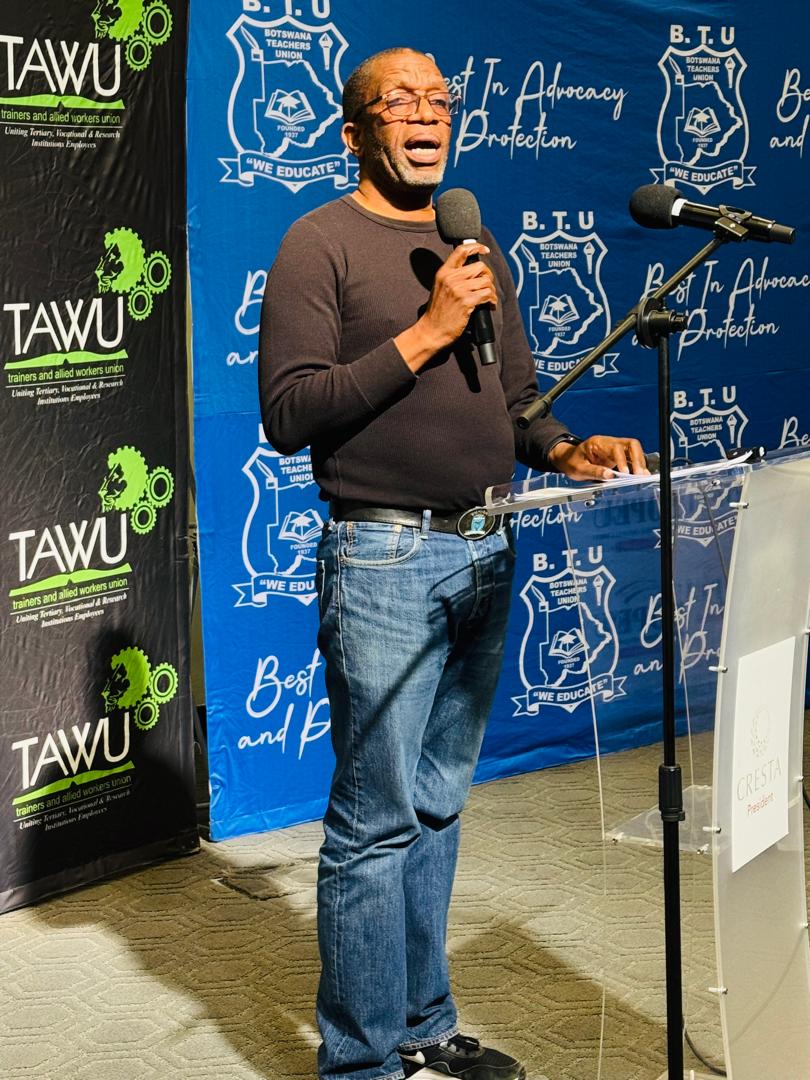
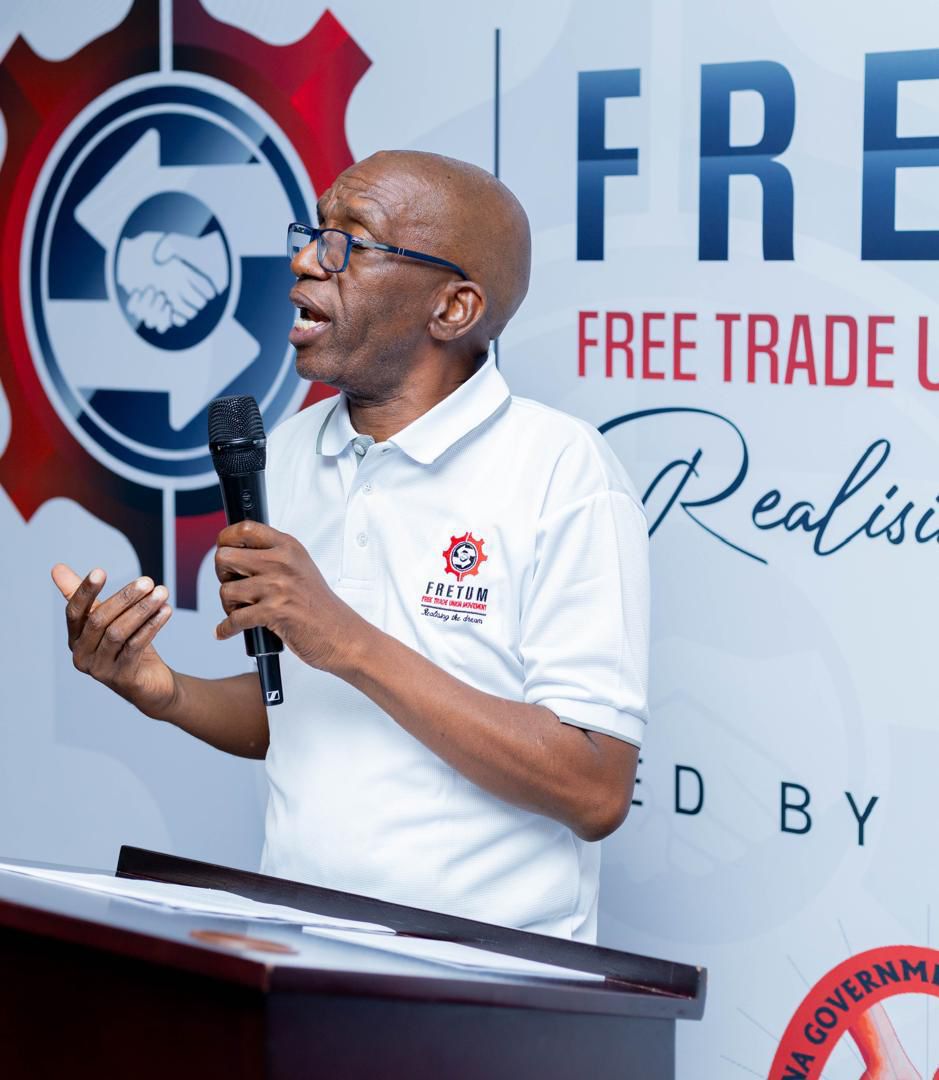
The Trainers and Allied Workers Union (TAWU) alongside the Botswana Government Workers Union (BOGOWU) officially launched a groundbreaking platform in Botswana called the Free Trade Union Movement (FRETUM). The launch event took place on January 31, 2025, at Travel Lodge in Gaborone and was attended by representatives from various organizations, trade unionists, and members of the media.
During the ceremony, Cde Kaboda Phillip, BOGOWU’s Secretary General, highlighted the significance of FRETUM within the broader future of Botswana’s trade unions. He expressed concern about the current leadership across Botswana’s public life, warning that if public affairs continue as they are, the nation could face collapse in just two years. He emphasized that the future of workers is directly tied to the country’s well-being and criticized the government’s anti-union stance, describing it as a repeat of failed policies from previous administrations. For instance, he noted that TAWU and BOGOWU have yet to secure a meeting with the current government, including President Duma Boko and Minister of State President Moeti Mohwasa.
In his welcoming remarks, Cde Seleke referenced President Boko’s emphasis on human rights and stated that FRETUM aligns with these principles. He also pointed out that the formation of FRETUM was inspired by the previous government’s call for a “mindset change.” While acknowledging the president’s progressive rhetoric, Cde Phillip expressed concern that some government officials actively undermine the ideals of workers’ rights, making the future of trade unions uncertain.
“Trade unions’ future is in danger,” declared Cde Phillip. He underscored that trade unionism is eternal, extending beyond current unions to future generations—including unborn children and the unemployed. He warned that government manipulation and oppression might threaten unions, but that FRETUM offers a pathway for self-liberation and resistance.
A former member of the TAWU Executive Committee, Cde Paul Mosimanegape, praised FRETUM as a positive development. He provided a background of Botswana’s labor movement, recalling how the government initially refused to ratify, then ratified, but failed to implement the ILO convention on unionization. Although progress has been made, Mosimanegape stressed that much work remains to protect workers’ rights, affirming FRETUM’s role in this ongoing effort.
Cde Rabasimane urged TAWU and BOGOWU to collaborate with international trade unions for knowledge exchange, capacity building, and unified action. Emphasizing the importance of solidarity in a globalized economy, he pointed out that collective voices are more powerful than individual ones. He also highlighted the historical role of trade unions in regulating working hours and conditions, a legacy that continues to drive union efforts worldwide to curb employer excesses.